What can you see inside the Catacombs of San Gennaro?
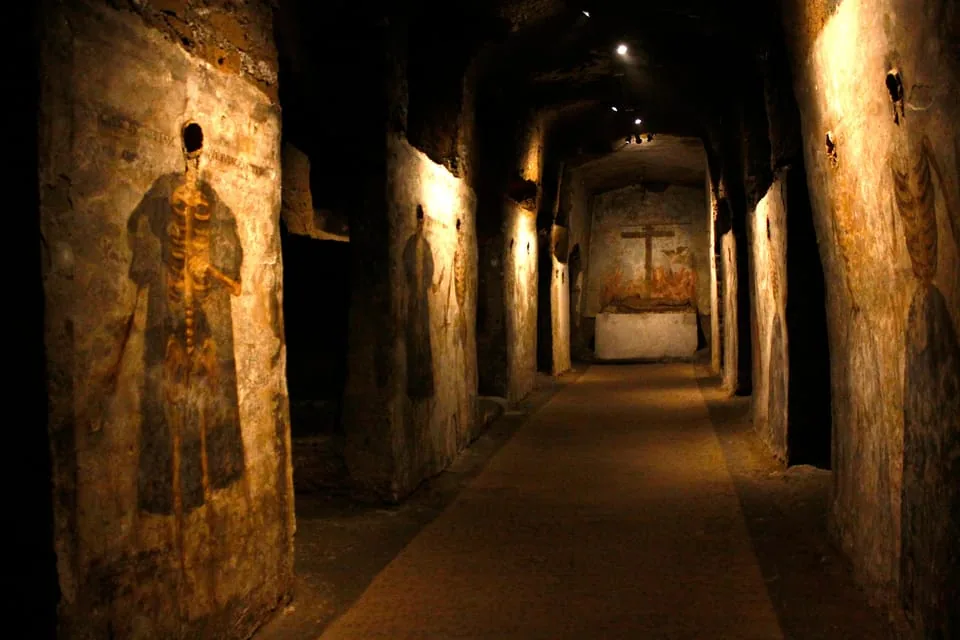
The lower catacomb
The visit usually starts on the lower level, which grew around the tomb of an early bishop and expanded enormously after San Gennaro was buried here in the 5th century. This is where you’ll find the Basilica Adiecta and the cult area that made the site a place of pilgrimage.
The upper catacomb
The upper level holds the oldest and most precious images: 2nd–3rd-century frescoes, geometric and floral decoration, and Christian symbols painted when the faith was still young. The standout is the oldest known portrait of San Gennaro, made within about a century of his death, plus vivid Byzantine saints glowing against gold backgrounds.
What you won’t see
This isn’t a bone-lined ossuary like some catacombs — it’s about architecture and painting, not displayed skeletons. And the blood of San Gennaro isn’t here; those famous ampoules are kept at Naples Cathedral in the old town, not in the catacombs.
Look up — some of the best-preserved frescoes are on the ceilings of the burial niches, easy to walk straight past.
Frequently asked questions
What is inside the Catacombs of San Gennaro?
Two levels of wide tufa galleries containing the tomb of San Gennaro, the oldest known portrait of the saint, early-Christian and Byzantine frescoes and mosaics, the large Basilica Adiecta and the bishops’ crypt. It feels more like an underground art gallery than a tunnel.
Are there bones or skeletons in the catacombs?
Unlike some catacombs, San Gennaro is not a bone-lined ossuary. The tombs are empty niches carved into the tufa, and the focus is on the architecture and the remarkable frescoes rather than displayed human remains.
Is the blood of San Gennaro kept in the catacombs?
No. The famous ampoules of San Gennaro’s blood are kept at Naples Cathedral (the Duomo) in the old town, not in the catacombs that bear his name.